What Cannot Be Stored in a Storage Unit: Complete 2026 Guide |
| WHAT ITEMS CANNOT BE STORED IN STORAGE UNITS
⏱ 12 min read ·
📄 #2,301 words
Learn which items are prohibited in storage units, including hazardous materials, perishables, and firearms. Avoid lease violations and safety hazards.
|
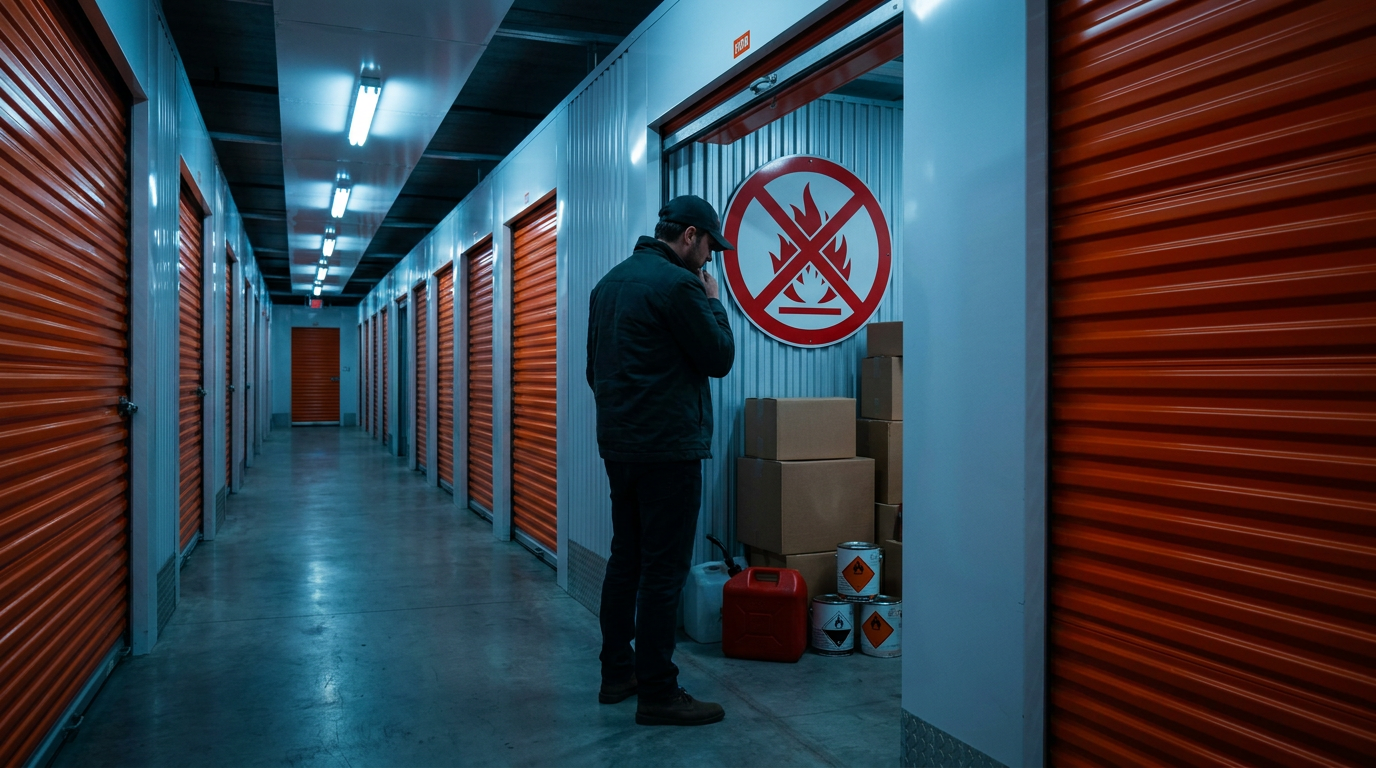
S torage units prohibit hazardous materials, flammable liquids, explosives, perishable food, living things, illegal items, and unregistered firearms. These restrictions exist because of fire codes, federal regulations, and insurance requirements that apply to all self storage facilities in the United States, including those in Colorado.
| Key Points: | |
|---|---|
| • | Flammable liquids (gasoline, propane, kerosene) violate fire codes and void facility insurance |
| • | Perishable food attracts pests within 48 to 72 hours and can damage neighboring units |
| • | Lithium-ion batteries pose fire risks; the National Fire Protection Association (NFPA) recorded 25,000+ battery fires in 2024 |
| • | Violations can result in immediate lease termination, fines of $500 to $5,000, and legal liability |
| • | Firearms regulations vary by state; Colorado requires secure storage but permits legal firearms in units |
Hazardous Materials and Chemicals
The Environmental Protection Agency (EPA) classifies hazardous materials into four categories: flammable, corrosive, reactive, and toxic. All four categories are universally prohibited in self storage facilities. According to Guardian Storage's prohibited items guide, these restrictions protect both individual renters and the broader facility community.
Common household hazardous materials include paint thinner, pool chemicals, pesticides, fertilizers containing ammonium nitrate, and automotive fluids. Even small quantities of these substances can trigger chemical reactions in enclosed spaces, particularly during Colorado's temperature extremes that range from below zero to above 95 degrees Fahrenheit.
Specific Chemicals to Avoid
Solvents like acetone, toluene, and methyl ethyl ketone release volatile organic compounds (VOCs) that accumulate in unventilated storage units. Corrosive substances including muriatic acid, battery acid, and drain cleaners can eat through containers over time. Reactive chemicals such as bleach and ammonia create toxic chloramine gas when containers leak and mix.
The Occupational Safety and Health Administration (OSHA) requires proper ventilation for spaces containing these chemicals. Standard storage units lack this ventilation, making chemical storage both dangerous and illegal under federal workplace safety regulations.
Flammable and Explosive Items
Fire marshals across Colorado enforce strict prohibitions on flammable and explosive materials in storage facilities. The International Fire Code (IFC), adopted by municipalities from Grand Junction to Denver, specifically addresses self storage fire safety requirements.
Gasoline presents the highest risk, with a flash point of negative 45 degrees Fahrenheit. This means gasoline vapors can ignite at temperatures far below what storage units experience. A single gallon of gasoline has the explosive potential of 83 sticks of dynamite when vaporized in an enclosed space, according to the National Institute for Occupational Safety and Health (NIOSH).
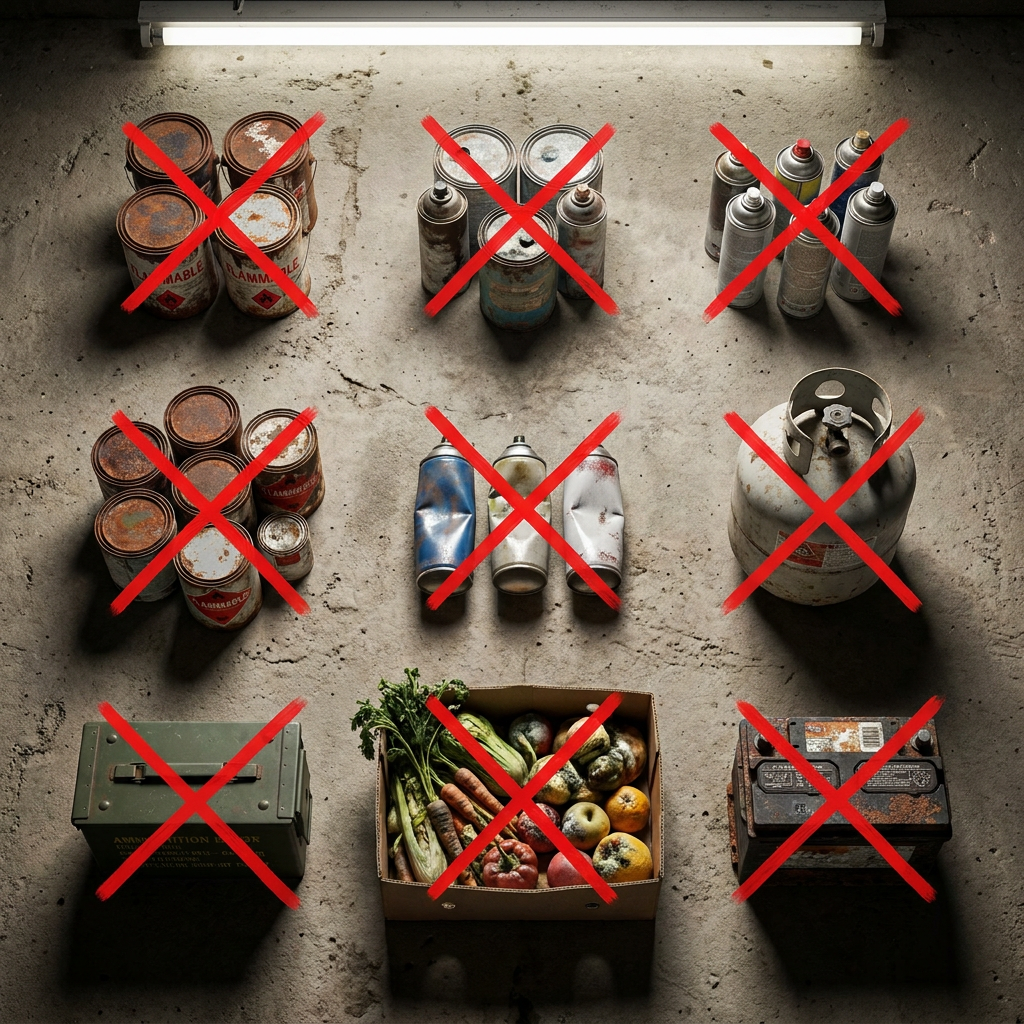
Complete List of Prohibited Flammables
| Item Category | Examples | Flash Point |
|---|---|---|
| Fuels | Gasoline, diesel, kerosene, propane | -45°F to 100°F |
| Aerosols | Spray paint, hairspray, WD-40 | -156°F to 20°F |
| Solvents | Paint thinner, turpentine, acetone | -4°F to 105°F |
| Explosives | Fireworks, ammunition (large quantities), black powder | N/A (explosive) |
| Compressed gases | Propane tanks, oxygen cylinders, butane | Varies by gas |
Propane tanks require special attention for residents along the I-70 corridor who use them for camping and grilling. Even "empty" propane tanks contain residual gas that can accumulate to dangerous levels. The Self Storage Association recommends disposing of old tanks at certified propane exchange locations rather than storing them.
Perishable Food and Organic Materials
Food items attract rodents, insects, and other pests within 48 to 72 hours of placement in storage. A single mouse can produce 50 to 75 droppings per day, contaminating not just your unit but spreading to neighboring spaces through wall gaps and ventilation systems.
The Cornerstone Storage prohibited items guide notes that pest infestations from food storage represent one of the most common lease violations. Facilities in Parachute, Battlement Mesa, Rifle, and other Western Slope communities face additional pressure from wildlife including bears, which can detect food odors from over a mile away.
What Counts as Perishable
Perishable items extend beyond obvious foods like meat and dairy. Opened packages of any food product, including dried goods, attract pests. Pet food, bird seed, and livestock feed fall into this category. Even sealed canned goods can expire, leak, and create odor problems over extended storage periods.
Non-food organic materials also pose risks. Untreated leather, natural fiber rugs, and unwashed clothing can develop mold in humid conditions. Colorado's dry climate reduces but does not eliminate this risk, particularly during monsoon season from July through September when humidity levels spike.
Living Things: Animals and Plants
No self storage facility in the United States permits storing live animals or plants. This prohibition exists for animal welfare reasons, but also because living organisms create moisture, waste, and odors that damage storage infrastructure.
Plants release moisture through transpiration, increasing humidity inside sealed units. A single medium houseplant releases 2 to 4 cups of water into the air daily. This moisture promotes mold growth on furniture, cardboard boxes, and other stored items. Root systems can also break through containers and damage unit floors.
Consequences of Animal Storage
Storing animals in storage units constitutes animal cruelty under Colorado Revised Statutes Section 18-9-202. Penalties include fines up to $100,000 and imprisonment for 12 to 18 months for aggravated cases. Storage facilities actively monitor for animal storage through regular inspections and security camera review.
If you need temporary animal housing during a move or renovation, contact Garfield County Animal Services or local boarding facilities in Rifle and Glenwood Springs. These services provide safe, legal alternatives for pet care during transitions.
Firearms and Ammunition Regulations
Firearm storage in self storage units occupies a legal gray area that varies significantly by state. Colorado law permits storing legally owned firearms in storage units, but federal regulations and facility policies add complexity that renters must understand.
The Bureau of Alcohol, Tobacco, Firearms and Explosives (ATF) does not prohibit firearm storage in self storage units. However, the Gun Control Act of 1968 requires that firearms remain inaccessible to prohibited persons, including felons and individuals with certain mental health adjudications. Storage unit locks alone may not satisfy this requirement.
Best Practices for Firearm Storage
Use a secondary locked container such as a gun safe or locking case inside your storage unit. Remove firing pins or use trigger locks as additional security measures. Store ammunition separately from firearms when possible, and never store more than 10 pounds of smokeless powder or 1 pound of black powder per ATF regulations.
Check your storage facility's specific policies before storing firearms. Some facilities prohibit all firearms regardless of state law, while others permit legal firearms with proper documentation. Insurance coverage for stored firearms also varies; most standard storage insurance policies exclude firearms or limit coverage to $500 to $1,000.
Lithium-Ion Batteries and Electronics
Lithium-ion batteries represent an emerging storage restriction that many renters overlook. The NFPA documented over 25,000 fires involving lithium-ion batteries in 2024, a 150% increase from 2020. Storage facilities increasingly prohibit or restrict items containing these batteries.
According to Premier Storage's analysis of lithium-ion battery hazards, thermal runaway in lithium batteries can occur without warning, even in batteries that appear undamaged. Temperature fluctuations in non-climate-controlled storage units accelerate battery degradation and increase fire risk.
Items Containing Lithium Batteries
Common items with lithium-ion batteries include laptops, tablets, smartphones, power tools, e-bikes, electric scooters, hoverboards, drones, and portable power stations. E-bikes and hoverboards pose the highest risk due to their large battery capacity; New York City attributed 267 fires and 18 deaths to e-bike and e-scooter batteries in 2024 alone.
If you must store electronics, remove batteries when possible and store them in fireproof battery bags rated for lithium chemistry. Consider climate-controlled storage to minimize temperature-related stress on batteries you cannot remove. Our storage unit size guide can help you determine appropriate unit sizes for electronics storage.
Vehicles and Vehicle-Related Restrictions
Vehicle storage comes with specific restrictions that differ from standard unit storage. While Parachute Self Storage offers outdoor parking for boats, RVs, and vehicles, certain conditions must be met before storing any vehicle.
Vehicles must be registered, insured, and operable. Unregistered vehicles violate Colorado Department of Revenue regulations and create liability for storage facilities. Inoperable vehicles that leak fluids pose environmental hazards and fire risks. The RecNation Storage guidelines emphasize that vehicles must be in drivable condition at the time of storage.
Preparing Vehicles for Storage
Drain fuel tanks to one-quarter full or less for storage exceeding 30 days. Add fuel stabilizer to prevent varnish buildup in carburetors and fuel injectors. Disconnect batteries or use a battery maintainer to prevent discharge. Remove all food, trash, and perishable items from vehicle interiors.
For RV and boat storage along the I-70 corridor, additional winterization steps protect against freeze damage. Drain fresh water systems, add RV antifreeze to holding tanks, and remove any water-based products. Our facilities in Parachute serve customers from Rifle, Silt, New Castle, and Grand Junction who store recreational vehicles during off-seasons.
Illegal Items and Stolen Property
All self storage facilities prohibit illegal items and stolen property. This includes controlled substances, counterfeit goods, unlicensed weapons, and any property obtained through theft or fraud. Storage facilities cooperate with law enforcement investigations and may access units when presented with valid warrants.
Colorado's self storage lien laws, codified in C.R.S. 38-21.5-101 through 38-21.5-106, grant facility operators the right to inspect units when lease violations are suspected. Facilities also conduct routine exterior inspections and may use security footage to identify suspicious activity.
Consequences of Storing Illegal Items
Storing illegal items results in immediate lease termination without refund. Renters face criminal charges based on the nature of stored items, ranging from misdemeanor possession to felony trafficking charges. Civil liability extends to any damage caused to the facility or other renters' property.
The Self Storage Association reports that facilities discover illegal items in approximately 0.3% of units during lien auctions and inspections. While this percentage seems small, it represents thousands of incidents annually across the industry.
High-Value and Irreplaceable Items
While not technically prohibited, many facilities discourage storing high-value and irreplaceable items due to insurance limitations. Standard storage insurance policies cap coverage at $2,000 to $5,000, far below the value of jewelry, fine art, antiques, and collectibles.
Cash and negotiable instruments like bearer bonds present additional problems. Most insurance policies explicitly exclude cash, and proving the amount of cash stored after a theft is nearly impossible. Securities, stock certificates, and important legal documents belong in bank safe deposit boxes rather than storage units.
Alternatives for Valuable Items
Bank safe deposit boxes cost $50 to $300 annually depending on size and location. Specialized fine art storage facilities offer climate control, security, and insurance packages tailored to valuable collections. For documents, consider digital scanning and secure cloud storage as a backup to physical storage in fireproof safes.
If you choose to store valuable items, purchase separate valuable articles insurance through providers like Jewelers Mutual or Collectibles Insurance Services. Document all items with photographs, appraisals, and serial numbers before storage. Our locally owned facility features 24/7 video surveillance and coded gate entry, but supplemental insurance provides additional peace of mind for valuable items.
What Happens If You Store Prohibited Items
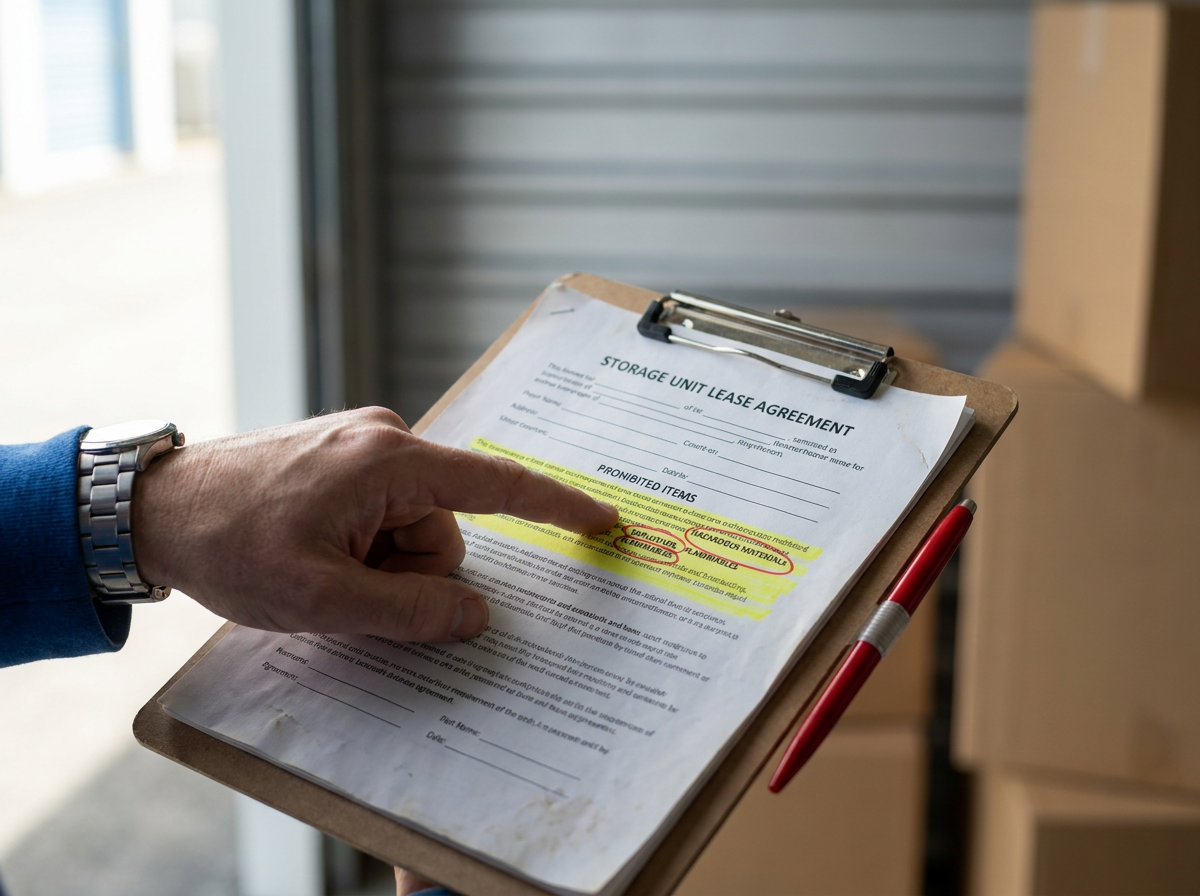
Storing prohibited items triggers a cascade of consequences that extend beyond simple lease termination. Understanding these consequences helps renters appreciate why facilities enforce restrictions strictly.
Immediate consequences include lease termination with forfeiture of any prepaid rent. Facilities may charge cleaning and remediation fees ranging from $200 for minor violations to $5,000 or more for hazardous material cleanup. The KO Storage policy guide outlines typical fee structures for various violation types.
Legal and Insurance Implications
Insurance claims related to prohibited items are universally denied. If your prohibited items cause damage to other units, you face personal liability for all damages. Homeowners and renters insurance policies typically exclude coverage for items stored off-premises, leaving violators personally responsible for potentially massive claims.
Criminal charges may apply depending on the prohibited items involved. Storing hazardous materials can result in EPA fines starting at $25,000 per day of violation. Fire code violations carry municipal fines and potential criminal negligence charges if injuries occur.
Frequently Asked Questions
Can I store a small amount of gasoline in my storage unit?
No. Even small amounts of gasoline are prohibited because vapors accumulate in enclosed spaces and can ignite from static electricity, pilot lights in adjacent buildings, or electrical sparks. There is no safe minimum quantity for gasoline storage in self storage units.
Are canned goods considered perishable?
Sealed canned goods are generally permitted for short-term storage, but they can expire, leak, and attract pests over time. For storage exceeding six months, remove all food items including canned goods. Check with your specific facility for their food storage policies.
Can I store my hunting rifles in a storage unit?
Colorado law permits storing legally owned firearms in storage units. However, you should use a secondary locked container, check your facility's specific policies, and verify insurance coverage. Store ammunition separately and never exceed ATF powder storage limits.
What about storing a lawn mower with gas in the tank?
Drain the fuel tank before storing any gas-powered equipment. Residual fuel in lawn mowers, chainsaws, and generators creates the same fire hazard as stored gasoline containers. Run the engine until it stops to remove fuel from the carburetor as well.
Can I store my e-bike in a storage unit?
E-bike storage policies vary by facility due to lithium-ion battery fire risks. Some facilities permit e-bikes with batteries removed; others prohibit them entirely. Contact your facility directly and consider climate-controlled storage to minimize battery degradation.
What happens if I accidentally store a prohibited item?
Remove the item immediately upon discovering the violation. Notify facility management proactively; most facilities appreciate honesty and may waive penalties for good-faith violations promptly corrected. Continued storage after notification results in full enforcement of lease penalties.
|