Drive-Up Storage in Parachute: When It Makes Sense |
| DRIVE-UP STORAGE IN PARACHUTE: WHEN IT MAKES SENSE
⏱ 20 min read ·
📄 #3,869 words
Discover when drive-up storage in Parachute, CO is the right choice. Compare costs, access benefits, and ideal use cases for residents along the I-70 corridor.
|
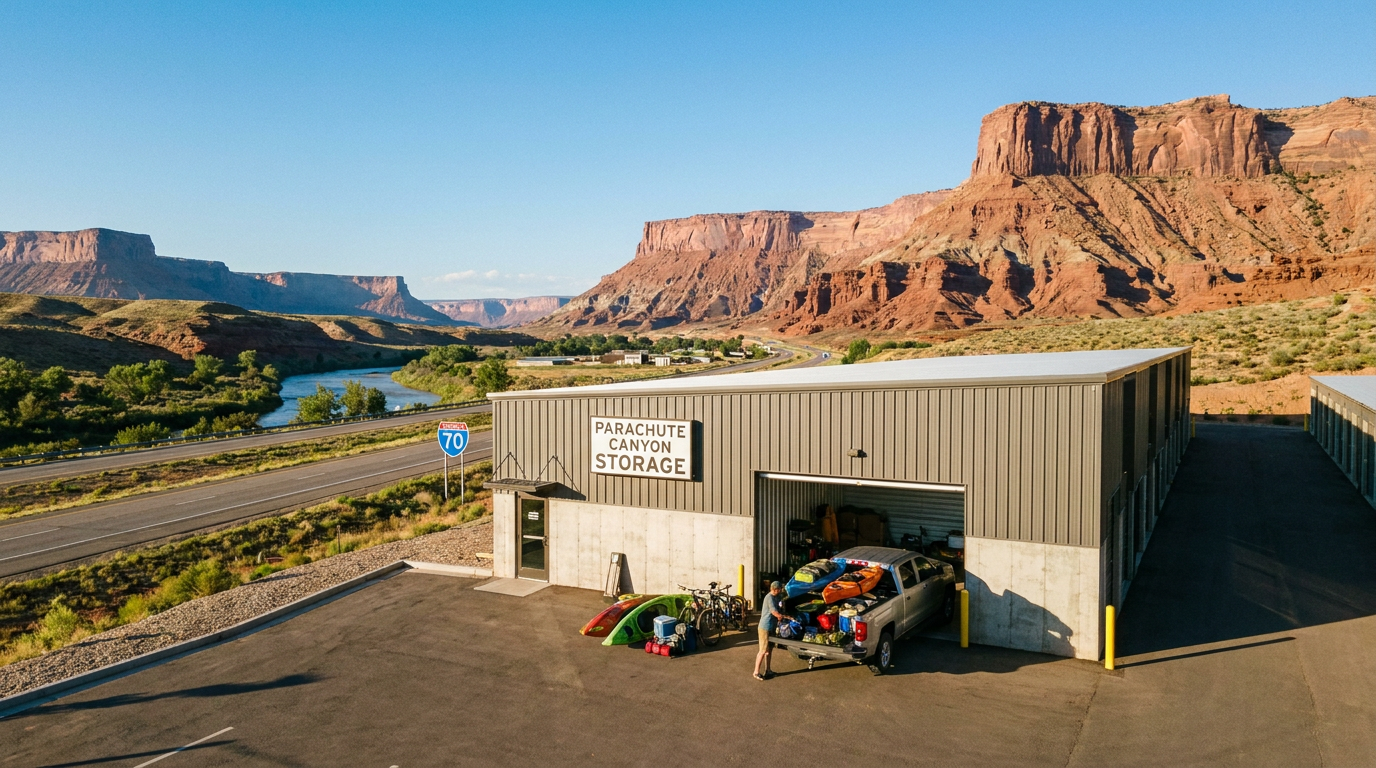
D rive-up storage makes sense when you need frequent access, store heavy items, or want to load and unload directly from your vehicle. In Parachute, Colorado, drive-up units cost between $55 and $195 per month depending on size, offering ground-level convenience that indoor units cannot match for residents along the I-70 corridor.
| Key Points: | |
|---|---|
| • | Drive-up units in Parachute range from $55/month (5x10) to $195/month (10x20) |
| • | Best for furniture, appliances, business inventory, and items weighing over 50 pounds |
| • | 24/7 access allows loading at any hour without staff assistance |
| • | Ground-level access eliminates elevator waits and hallway navigation |
| • | Month-to-month leases with no deposit required provide flexibility for seasonal needs |
What Does Drive-Up Mean in Storage Units?
Drive-up storage refers to ground-level units with roll-up doors that allow you to park your vehicle directly in front of the unit entrance. According to the Self Storage Association's industry guidelines, drive-up units function similarly to a personal garage, with the key difference being that they are located within a secured facility rather than attached to your home.
The defining characteristic is direct vehicle access. You pull up, open the door, and transfer items without navigating hallways, elevators, or loading docks. This design originated in the 1960s when the modern self-storage industry began in Texas, and it remains the most popular unit type in rural and suburban markets like Western Colorado.
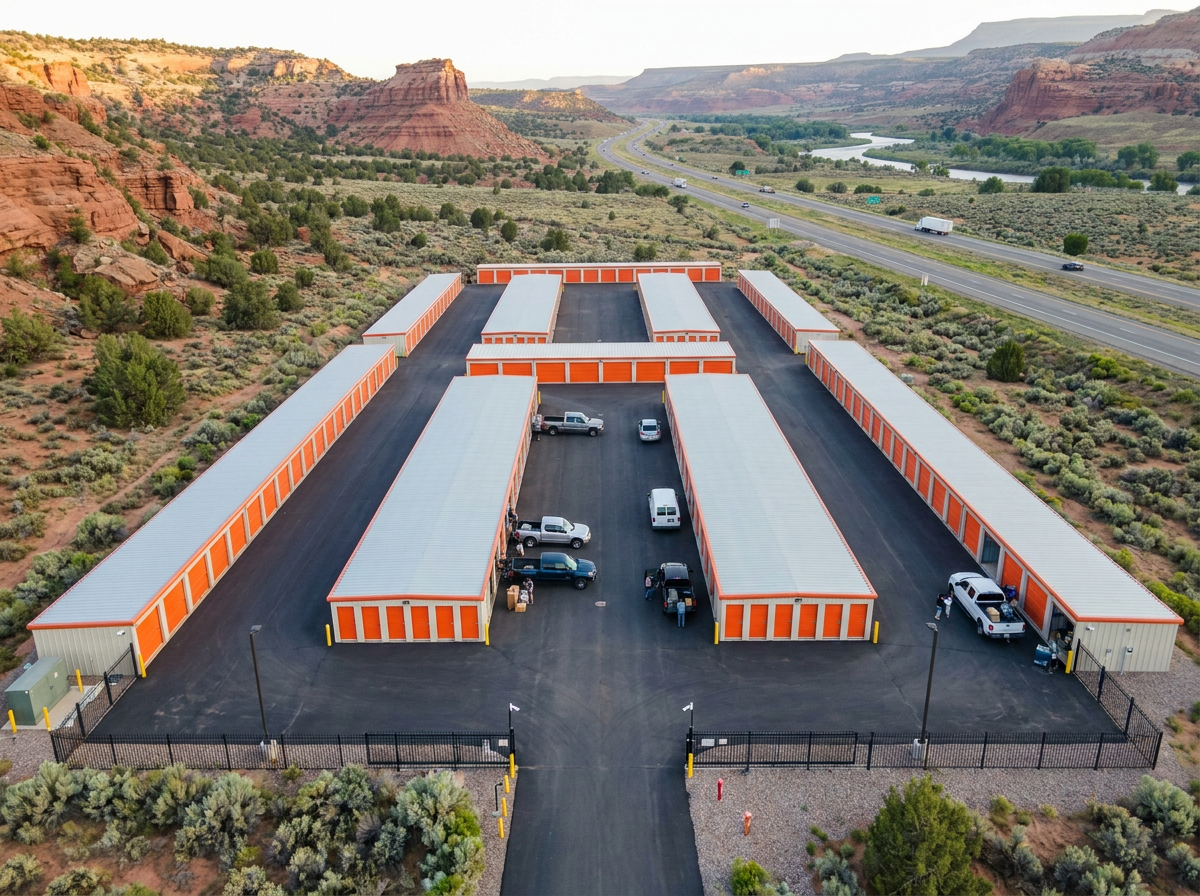
At facilities along the I-70 corridor, including those in Parachute, Battlement Mesa, Rifle, and Silt, drive-up units typically feature metal roll-up doors ranging from 4 feet to 10 feet wide. The wider doors accommodate larger items like couches, mattresses, and appliances without disassembly.
How Drive-Up Differs from Indoor Storage
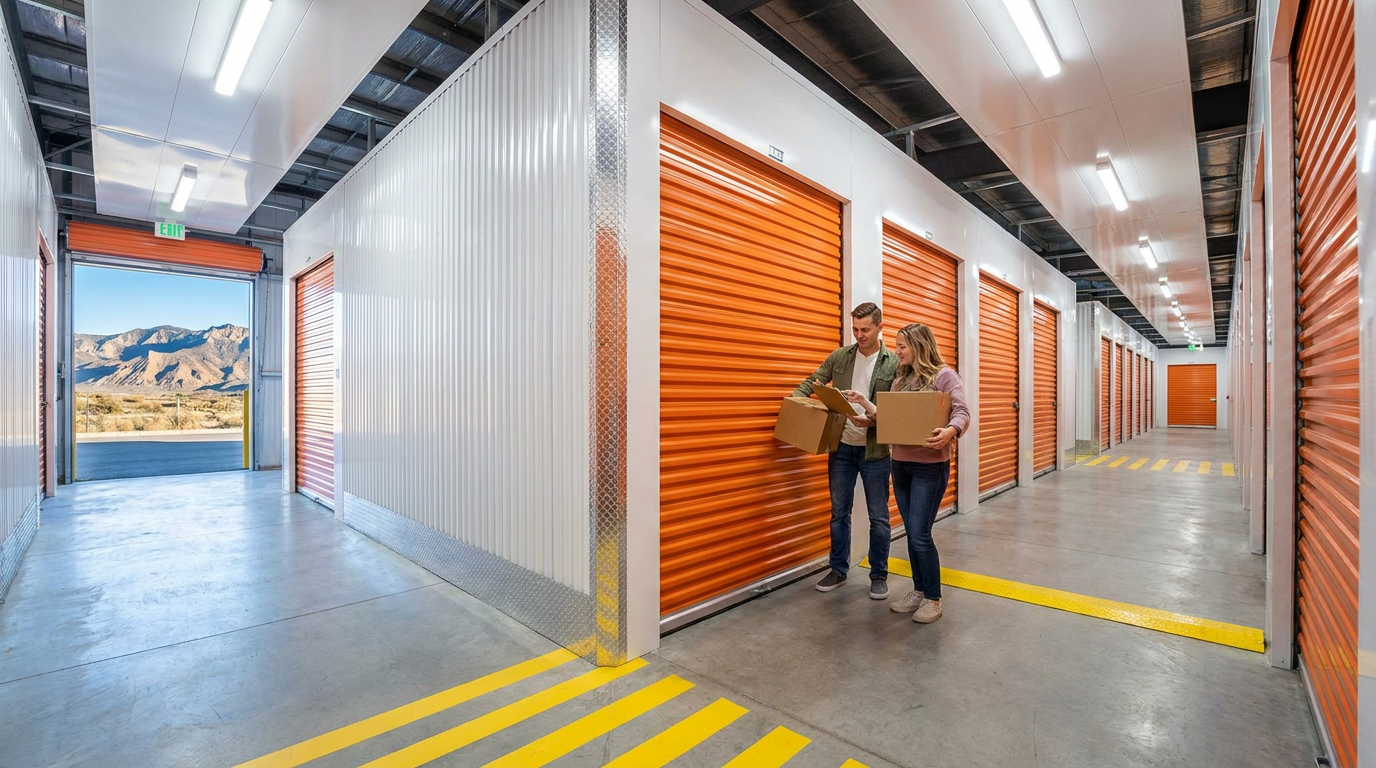
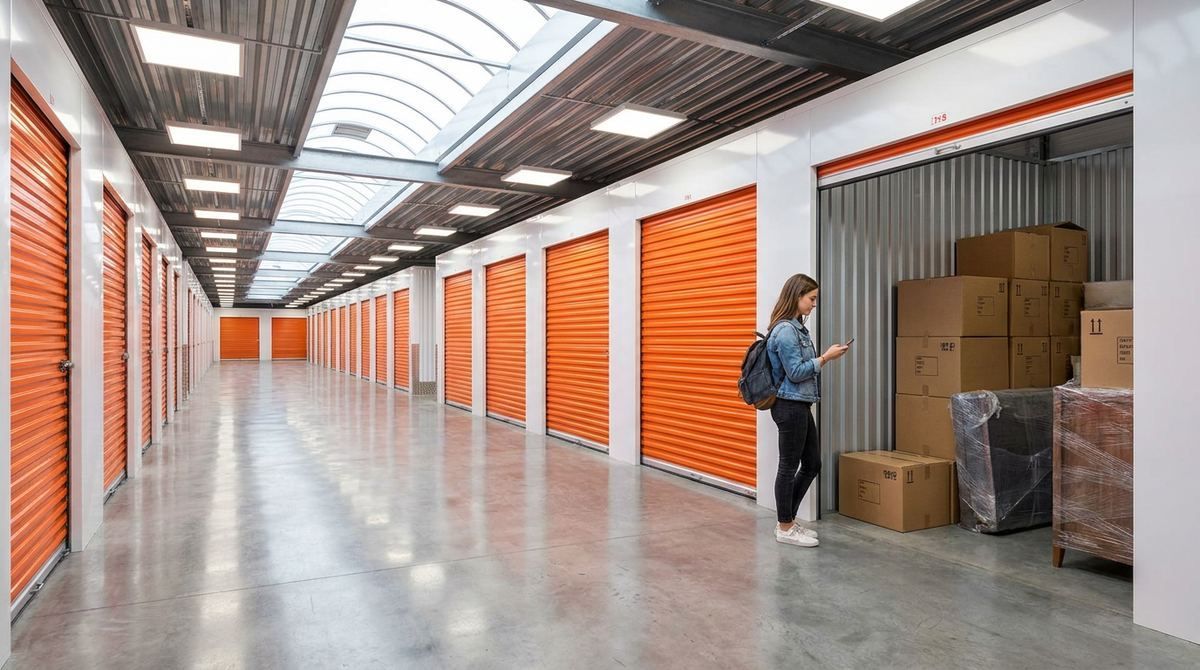
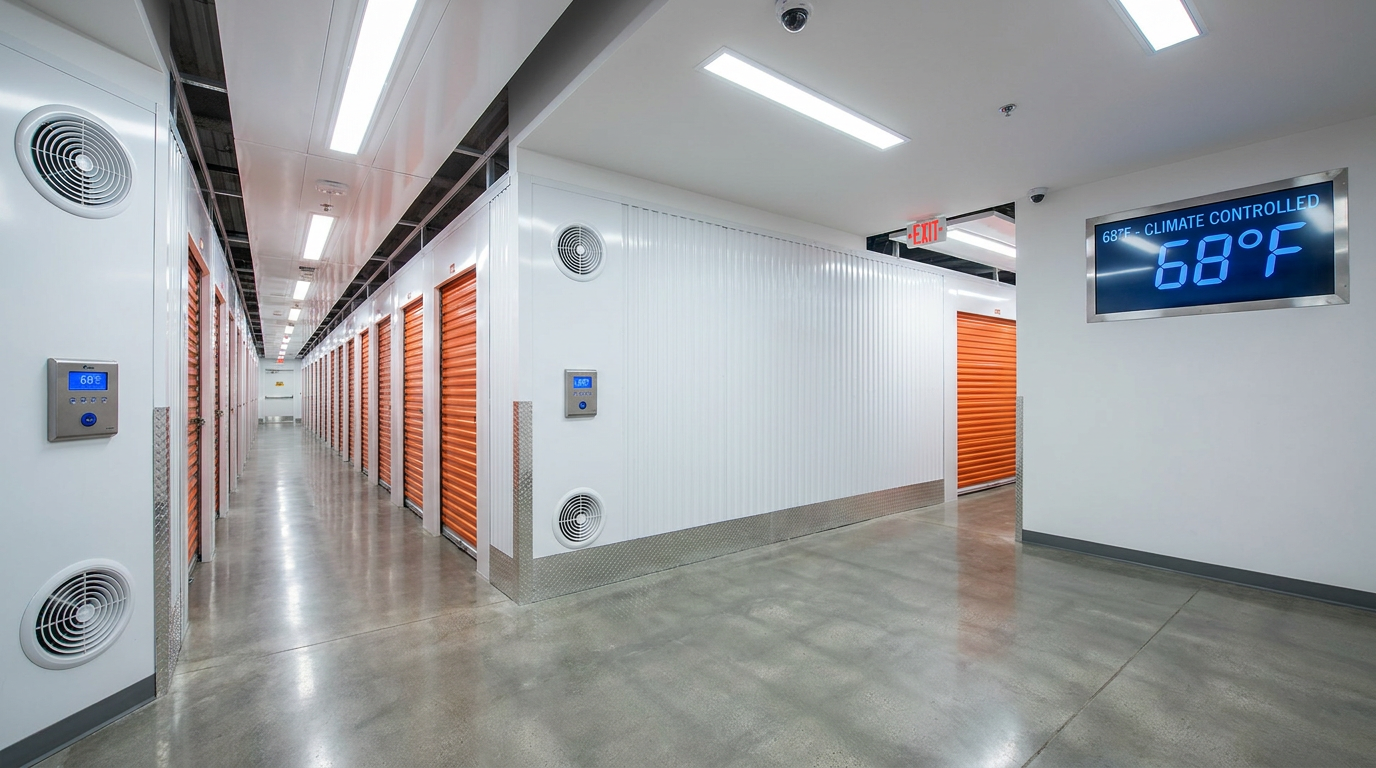
Indoor storage units are located inside climate-controlled buildings with interior hallways. You park in a common area, load items onto a cart, and transport them through the building to your unit. This process adds 15 to 30 minutes per trip compared to drive-up access.
Drive-up units expose contents to outdoor temperature fluctuations through the door seal, while indoor units maintain consistent conditions year-round. In Parachute, where temperatures range from 10 degrees Fahrenheit in January to 95 degrees Fahrenheit in July, this distinction matters for temperature-sensitive items.
| Feature | Drive-Up Storage | Indoor Storage |
|---|---|---|
| Vehicle Access | Direct to unit door | Parking lot only |
| Loading Time | 5 to 15 minutes | 20 to 45 minutes |
| Temperature Control | Ambient outdoor | 55 to 80 degrees Fahrenheit |
| Best For | Furniture, equipment, frequent access | Documents, electronics, antiques |
| Typical Cost (10x10) | $115 to $150/month | $100 to $200/month |
When Drive-Up Storage Makes the Most Sense
Drive-up storage delivers the highest value in specific situations where convenience and accessibility outweigh climate control. Understanding these scenarios helps you avoid paying for features you do not need while ensuring your belongings remain protected.
Moving Between Homes
Transitional storage during a move represents the most common use case for drive-up units. When selling a home in Parachute or Battlement Mesa before your new residence is ready, drive-up access allows moving trucks to back directly to the unit door. This reduces loading time by approximately 60 percent compared to indoor facilities.
The average household move requires 3 to 5 trips between the old home, storage facility, and new residence. With drive-up access, each trip takes 20 to 30 minutes less, saving 1.5 to 2.5 hours total. For families coordinating moves along the I-70 corridor between Rifle and Grand Junction, this time savings translates to reduced moving truck rental costs and less physical exhaustion.
Month-to-month leases work particularly well for moving situations. Rather than committing to a 6 or 12 month contract, you can rent for exactly the duration needed, whether that is 3 weeks or 3 months. Facilities like Parachute Self Storage offer immediate move-in with no deposit required, eliminating upfront costs during an already expensive transition.
Storing Heavy or Bulky Items
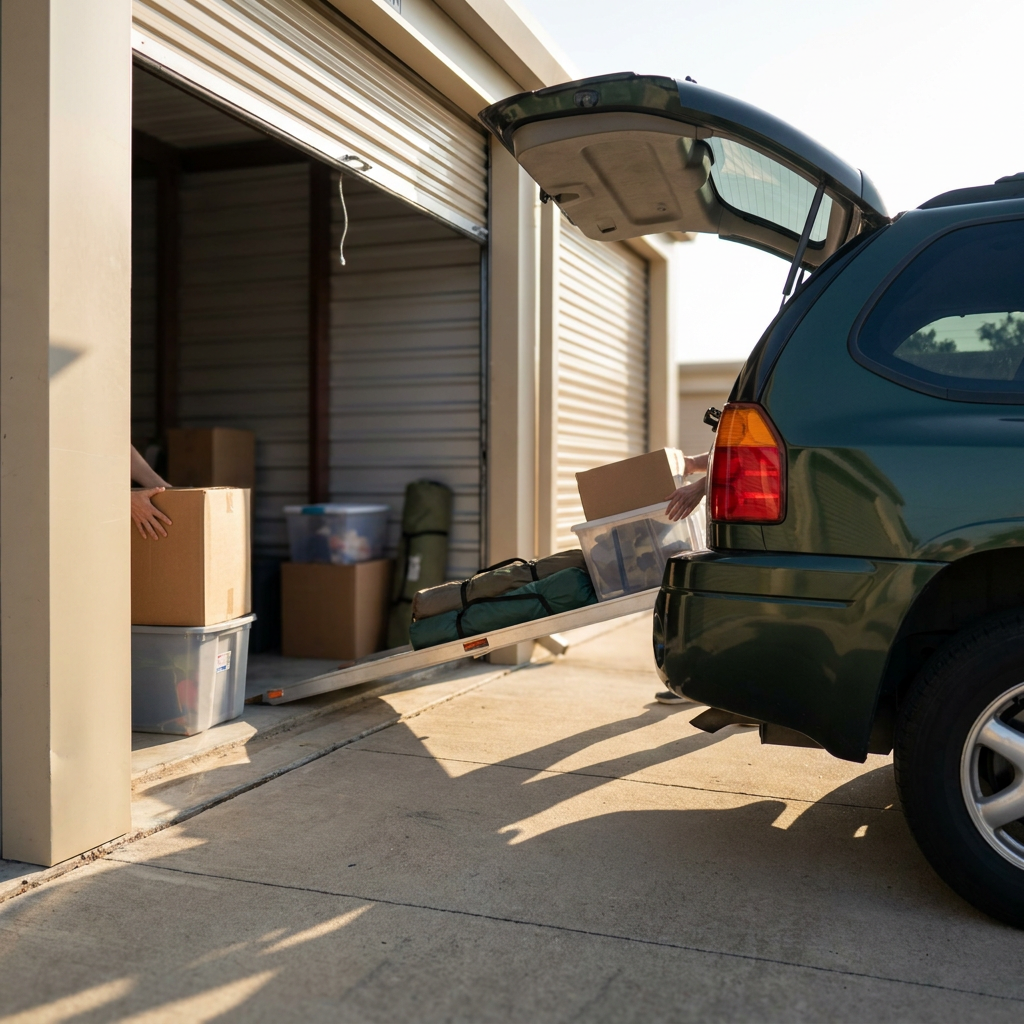
Items weighing more than 50 pounds become significantly easier to manage with ground-level, drive-up access. Refrigerators, washing machines, exercise equipment, and solid wood furniture require either multiple people or specialized equipment to move through hallways and elevators.
A standard refrigerator weighs between 150 and 300 pounds. Moving this appliance from a parking lot through a building to an interior unit requires a heavy-duty dolly, clear hallways, and often a freight elevator. With drive-up access, you roll the appliance directly from your truck into the unit, reducing handling to a single transfer.
Contractors and tradespeople along the Western Slope frequently store equipment like table saws, compressors, and scaffolding in drive-up units. A DeWalt 10-inch table saw weighs 90 pounds, making repeated trips through indoor facilities impractical. Drive-up access allows these professionals to retrieve and return equipment in under 10 minutes.
Frequent Access Needs
If you plan to visit your storage unit more than twice per month, drive-up access provides measurable time savings. Business owners storing inventory, hobbyists accessing seasonal gear, and families retrieving holiday decorations all benefit from the reduced access time.
Consider a small business owner in New Castle who stores excess inventory at a Parachute facility due to lower rental rates. Visiting the unit 8 times per month to retrieve products, the time difference between drive-up and indoor access totals 2 to 4 hours monthly. Over a year, this equals 24 to 48 hours saved, representing real labor cost savings for the business.
Facilities offering 24/7 gated access maximize this benefit. Early morning pickups before a job site or late evening drop-offs after a weekend trip become possible without scheduling around facility office hours.
Seasonal Recreation Equipment
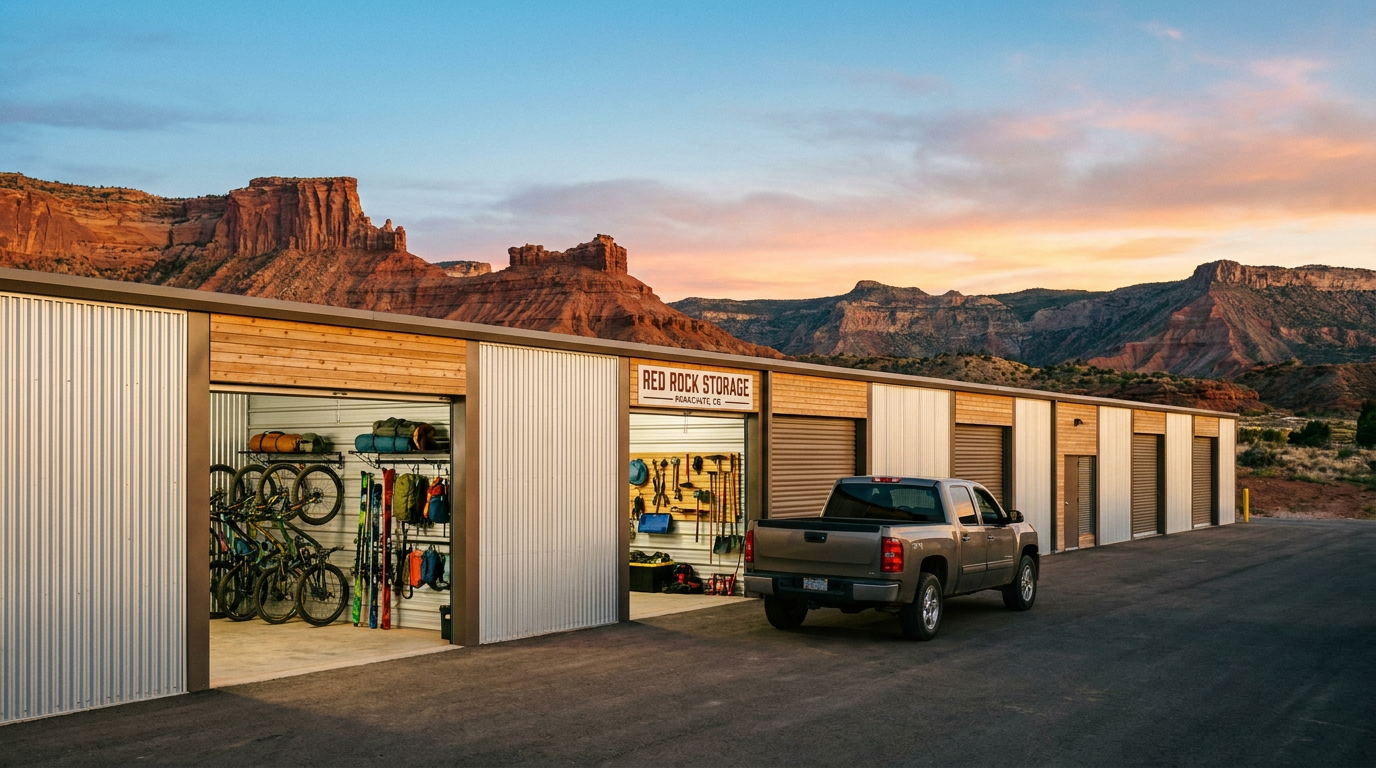
Colorado's outdoor recreation culture creates significant demand for seasonal storage. Skis, snowboards, camping gear, fishing equipment, and hunting supplies cycle in and out of active use throughout the year. Drive-up units accommodate this rotation efficiently.
A typical ski setup including skis, boots, poles, and gear bag weighs 25 to 40 pounds per person. For a family of four, swapping winter and summer gear involves moving 100 to 160 pounds of equipment. Drive-up access allows you to pull up, swap the seasonal items, and leave in under 15 minutes.
Kayaks and paddleboards present particular challenges for indoor storage due to their length (10 to 14 feet) and awkward shape. Drive-up units with wide doors allow these items to slide directly in without navigating corners or doorways. A 10x15 drive-up unit in Parachute rents for $155 per month and accommodates multiple kayaks alongside other household items.
What Are the Cons of Drive-Up Storage Units?
Drive-up storage presents specific limitations that make it unsuitable for certain items and situations. Understanding these drawbacks helps you make an informed decision rather than discovering problems after signing a lease.
Temperature and Humidity Exposure
Drive-up units in Parachute experience the full range of Western Colorado's semi-arid climate. Summer temperatures inside an unshaded metal storage unit can reach 120 degrees Fahrenheit when outdoor temperatures hit 95 degrees. Winter temperatures drop to match outdoor conditions, potentially reaching single digits during cold snaps.
This temperature variation damages specific item categories. Vinyl records warp above 100 degrees Fahrenheit. Wooden instruments like guitars and violins crack when humidity drops below 40 percent, common in Colorado's dry winters. Electronics with LCD screens can suffer permanent damage from repeated freeze-thaw cycles.
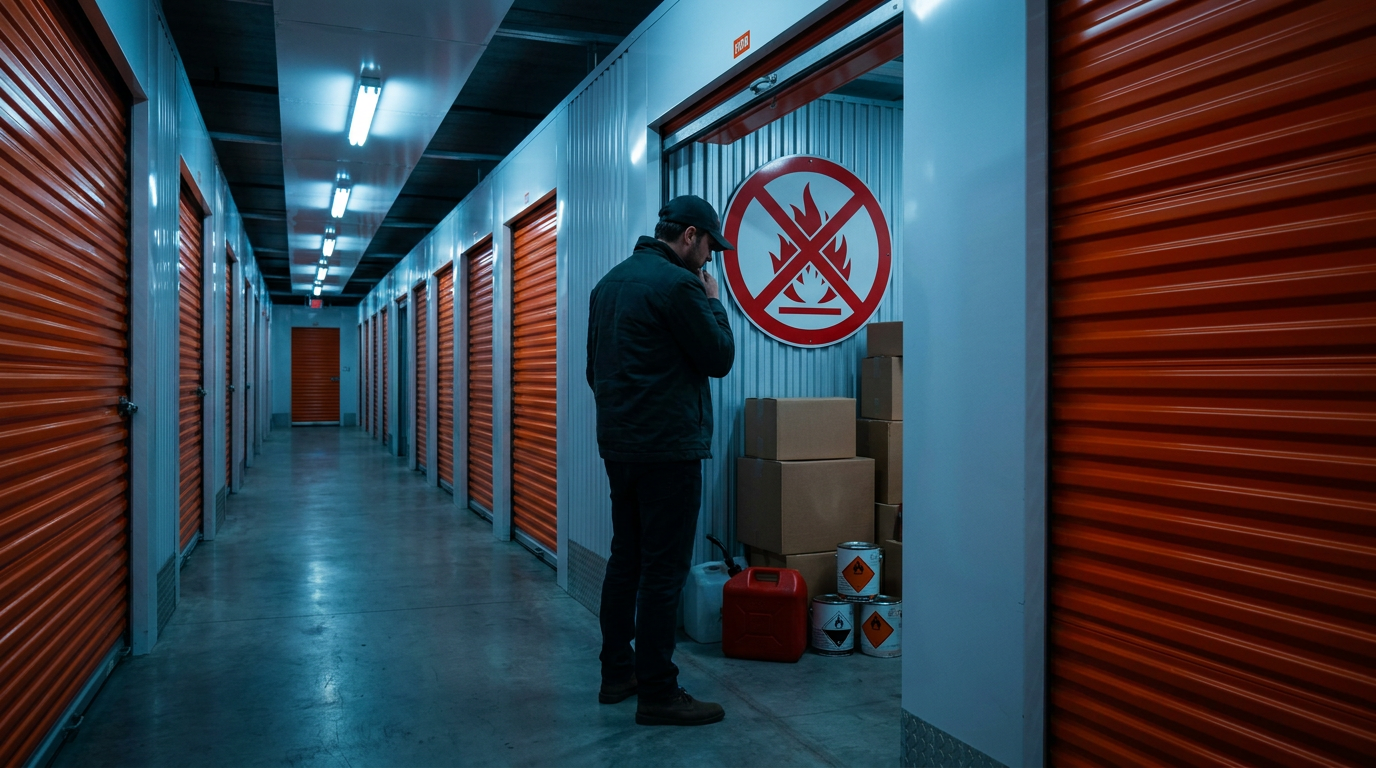
Items requiring climate-controlled storage include photographs and film negatives, leather furniture and clothing, wine collections, pharmaceutical products, cosmetics, candles, and any item with a manufacturer storage temperature recommendation. If your belongings fall into these categories, indoor climate-controlled storage provides better protection despite the higher cost and reduced convenience.
Dust and Pest Considerations
Ground-level units with roll-up doors allow more dust infiltration than sealed indoor units. In Parachute's high desert environment, fine dust particles accumulate on stored items, particularly during windy spring months. Items stored for more than 6 months benefit from protective covers or sealed containers.
While modern storage facilities implement pest control measures, drive-up units present more entry points for insects and rodents than interior units. The gap beneath roll-up doors, even when properly sealed, provides potential access. Storing food, cardboard boxes, or fabric items without proper protection increases pest attraction risk.
Mitigation strategies include using plastic storage bins instead of cardboard boxes, placing mothballs or cedar blocks near fabric items, and avoiding storing any food products. Facilities with perimeter fencing and regular maintenance reduce but do not eliminate these concerns.
Security Perception
Some renters perceive drive-up units as less secure than interior units because the access door faces an outdoor drive aisle rather than an interior hallway. However, modern facilities counter this through layered security measures.
Effective drive-up facility security includes perimeter fencing with coded gate entry, 24/7 video surveillance covering all drive aisles, individual unit door alarms, and adequate lighting throughout the property. The Self Storage Association reports that facilities with these features experience theft rates comparable to or lower than interior-only facilities.
The key security factor is the facility's overall design and management rather than the unit type. A well-managed drive-up facility with modern security systems provides better protection than a poorly maintained indoor facility with outdated equipment.
Drive-Up Storage Costs in Parachute
Storage pricing in Parachute reflects the area's lower cost of living compared to Front Range cities like Denver and Boulder. Drive-up units cost 30 to 50 percent less than comparable units in metropolitan areas while providing the same functionality.
Current Pricing by Unit Size
Parachute Self Storage offers drive-up units ranging from 50 square feet to 200 square feet. The complete size guide helps match your storage needs to the appropriate unit, but general pricing follows predictable patterns based on square footage.
| Unit Size | Square Feet | Monthly Cost | Cost Per Sq Ft | Best For |
|---|---|---|---|---|
| 5x10 | 50 | $55 | $1.10 | Boxes, seasonal gear, small furniture |
| 10x10 | 100 | $115 | $1.15 | One-bedroom apartment contents |
| 10x10 Dual-Door | 100 | $95.00 | $0.95 | Organized business inventory |
| 10x15 | 150 | $155 | $1.03 | Two-bedroom home, recreational gear |
| 10x20 | 200 | $195.00 | $0.98 | Vehicles, multi-room homes |
| 20x10 Dual-Door | 200 | $185.00 | $0.93 | Separated storage sections |
The cost per square foot decreases as unit size increases, making larger units more economical for substantial storage needs. However, renting more space than necessary wastes money. A 10x15 unit at $155 per month costs $1,860 annually, while an oversized 10x20 at $195 per month totals $2,340 annually.
Hidden Costs to Consider
Some storage facilities add fees that significantly increase the effective monthly rate. Common additional charges include administrative fees ($15 to $50 one-time), security deposits (often equal to one month's rent), mandatory insurance ($10 to $25 monthly), and lock purchases ($10 to $30).
Facilities offering no-deposit rentals and month-to-month leases eliminate several of these costs. When comparing facilities in Parachute, Rifle, or Grand Junction, request a complete cost breakdown including all fees before committing. The advertised rate rarely tells the complete story.
Insurance deserves particular attention. Your homeowner's or renter's insurance policy may already cover stored belongings, making facility-provided insurance redundant. Contact your insurance provider to verify coverage limits and any exclusions for items in storage before purchasing additional protection.
Choosing the Right Unit Size
Selecting the correct unit size prevents both wasted money on excess space and the frustration of items not fitting. The Self Storage Association estimates that 30 percent of renters choose units larger than necessary, while 15 percent select units too small for their needs.
Room-by-Room Calculation Method
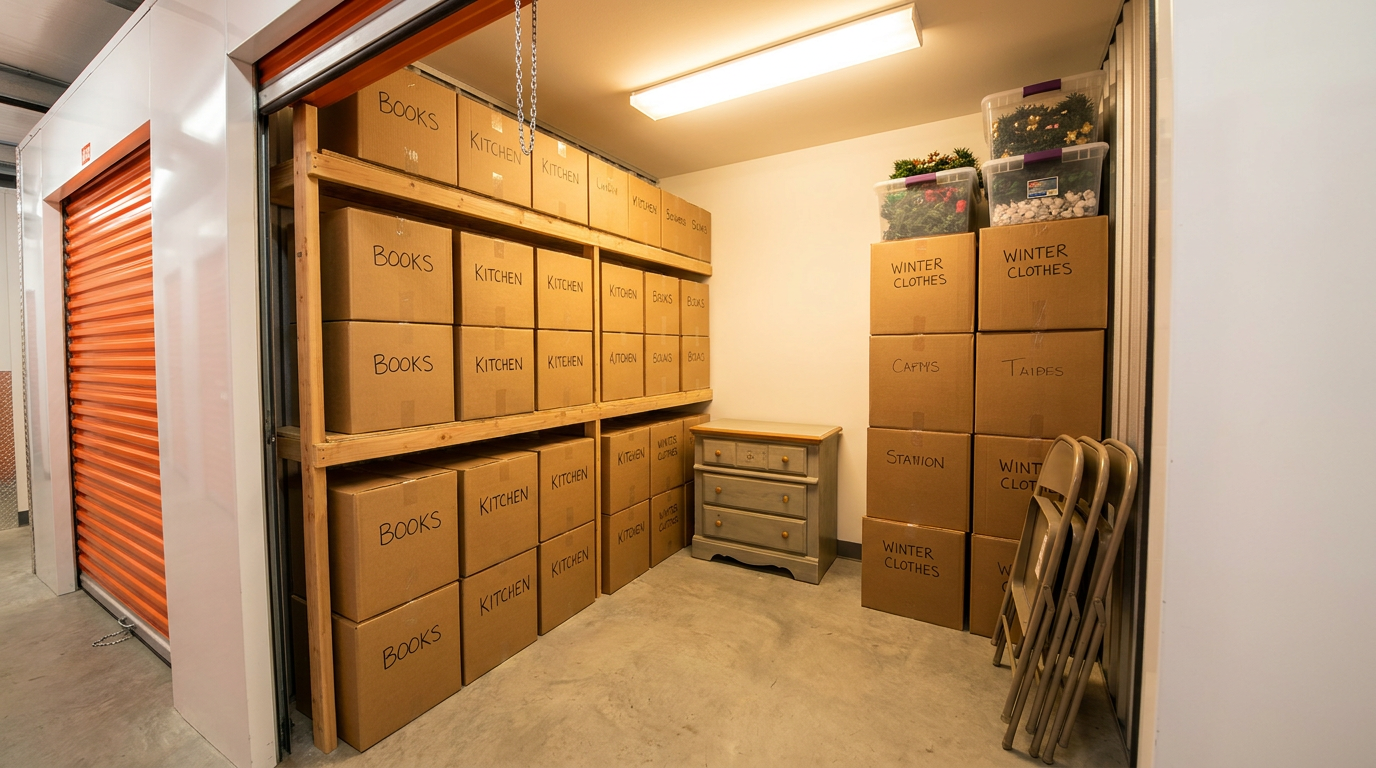
The most accurate sizing approach inventories items by room. Each room of a typical home requires approximately 50 to 75 square feet of storage space when furniture and boxes are stacked efficiently. A one-bedroom apartment fits in a 5x10 unit (50 square feet), while a three-bedroom home requires a 10x15 (150 square feet) or larger.
Large items drive space requirements more than box counts. A standard sofa occupies 30 to 40 cubic feet. A queen mattress set requires 35 cubic feet when stored on edge. A refrigerator takes 25 to 35 cubic feet. List your largest items first, then add 20 percent for boxes and miscellaneous items.
The storage unit size guide provides visual comparisons showing typical contents for each unit size. These references help translate abstract square footage into practical capacity understanding.
Special Considerations for Vehicles
Storing a vehicle in a drive-up unit requires careful measurement. A standard sedan measures approximately 15 feet long by 6 feet wide, fitting comfortably in a 10x20 unit with room for additional items. Trucks and SUVs often exceed 17 feet in length, requiring the full 20-foot depth without additional storage space.
For dedicated vehicle storage, outdoor parking spaces offer significant cost savings. An 11x20 open parking space in Parachute costs $75 per month compared to $195 for an enclosed 10x20 unit. The trade-off involves weather exposure and reduced security, but for vehicles driven regularly, this option provides adequate protection at 86 percent lower cost.
Boats, RVs, and trailers present unique sizing challenges due to their varied dimensions. Measure your specific vehicle including any extended hitches or accessories before selecting a space. Allow 12 to 18 inches of clearance on each side for safe maneuvering.
Can You Theoretically Live in a Storage Unit?
Living in a storage unit is illegal throughout the United States, including Colorado. Storage facilities are zoned for commercial use, not residential occupancy. Rental agreements explicitly prohibit habitation, and violations result in immediate lease termination.
Beyond legality, storage units lack the basic requirements for human habitation. No running water, sanitation facilities, ventilation systems, or emergency egress exist in standard units. Fire codes require residential spaces to meet specific safety standards that storage units cannot satisfy.
The facility FAQ addresses prohibited uses including habitation. Facilities monitor for signs of unauthorized living through security cameras, unusual access patterns, and routine inspections. Violations can result in eviction, loss of stored belongings, and potential criminal charges.
If you or someone you know faces housing instability, Colorado offers assistance programs through county human services departments. Garfield County Human Services provides emergency housing assistance, and regional organizations like Catholic Charities Western Slope offer transitional support.
What Is the Most Money Found in a Storage Unit?
The largest documented cash discovery in an auctioned storage unit totaled $7.5 million, found in a 2011 California auction. However, such discoveries remain extraordinarily rare. The typical abandoned unit contains household items worth $500 to $2,000 at resale.
Storage unit auctions occur when renters default on payments, typically after 60 to 90 days of non-payment depending on state law. Colorado requires facilities to provide written notice and a minimum waiting period before auction. The payment and move-out FAQ explains the specific timeline and notification process.
Auction buyers purchase unit contents sight-unseen based on a brief visual inspection from the doorway. Most purchases yield modest returns on common household items. The television show Storage Wars popularized unit auctions but significantly exaggerated typical find values for entertainment purposes.
For renters, the key lesson involves maintaining current payments to avoid losing belongings to auction. Setting up autopay through the facility's online portal eliminates the risk of missed payments due to oversight. Most facilities offer multiple payment methods including credit card, bank transfer, and cash.
Drive-Up Storage for Business Use
Small businesses along the I-70 corridor increasingly use drive-up storage for inventory, equipment, and document archives. The combination of low cost, flexible terms, and convenient access makes drive-up units attractive alternatives to commercial warehouse space.
Inventory Storage
Retail businesses, e-commerce sellers, and wholesalers store excess inventory in drive-up units during peak seasons or when warehouse capacity is exceeded. A 10x20 unit holds approximately 100 to 150 cubic feet of boxed inventory when properly organized with shelving.
The dual-door units available at some Parachute facilities provide particular advantages for business inventory. The center divider allows separation of different product lines or seasonal stock, while two access points speed loading and retrieval. A 20x10 dual-door unit at $185 per month offers more organizational flexibility than a standard 10x20 at $195.
Businesses storing inventory should verify insurance coverage and consider the tax implications. Storage rental costs typically qualify as deductible business expenses, but maintaining accurate records of stored inventory value remains important for both insurance claims and tax purposes.
Contractor Equipment Storage
Construction contractors, landscapers, and tradespeople store tools and equipment in drive-up units when job sites lack secure storage or when working multiple locations. The 24/7 access offered by facilities with coded gate entry allows early morning equipment retrieval before job sites open.
A 10x15 drive-up unit accommodates a typical contractor's overflow equipment including power tools, hand tools, ladders, and material stock. At $155 monthly, this storage solution costs less than the depreciation on a dedicated work trailer while providing better security and weather protection.
Contractors should consider the facility's drive aisle width when selecting a location. Narrow aisles make maneuvering with trailers difficult. Facilities designed for commercial use typically provide 25 to 30 foot wide drive aisles, while residential-focused facilities may have aisles as narrow as 15 feet.
Security Features That Matter
Drive-up storage security depends on facility design, technology systems, and management practices. Understanding which features provide genuine protection versus marketing appeal helps you evaluate facilities objectively.
Essential Security Elements
Perimeter fencing with controlled access represents the foundation of storage facility security. Effective systems require unique access codes for each tenant, log all entry and exit times, and restrict access to current renters only. Shared codes or easily bypassed gates provide minimal protection.
Video surveillance coverage should include all drive aisles, the entry gate, and facility perimeter. Modern systems record continuously in high definition and retain footage for 30 to 90 days. Cameras serve both deterrent and investigative functions, with visible camera placement discouraging opportunistic theft.
Adequate lighting throughout the facility prevents concealment and supports video surveillance quality. Dark corners and shadowed areas create security vulnerabilities regardless of camera placement. Well-lit facilities with motion-activated lighting provide both security and energy efficiency.
Evaluating Facility Security
When visiting a potential storage facility, observe the condition of security infrastructure. Damaged fencing, non-functional gates, or cameras with visible cobwebs indicate deferred maintenance that extends to security systems. Ask specific questions about surveillance footage retention, gate code policies, and incident response procedures.
The facility photos provide visual confirmation of security features before visiting in person. Look for images showing fencing condition, camera placement, lighting fixtures, and gate mechanisms. These details reveal the facility's actual security posture better than marketing claims.
Locally owned facilities often provide more responsive security management than corporate chains. On-site or nearby management can address security concerns quickly, while corporate facilities may require escalation through distant call centers. The facility management team at locally operated facilities typically knows regular tenants and notices unusual activity more readily.
Location Advantages Along the I-70 Corridor
Parachute's position along Interstate 70 at Exit 75 creates strategic advantages for storage users throughout the Western Slope. The facility serves residents and businesses from Glenwood Springs to Grand Junction, a 60-mile corridor with limited storage options.
Geographic Convenience
Residents of Battlement Mesa, located 3 miles east of Parachute, access storage facilities without navigating through town centers. The direct I-70 connection allows quick stops during commutes to Rifle, Silt, or New Castle. A storage visit adds only 10 to 15 minutes to a typical commute rather than requiring a dedicated trip.
Businesses operating along the I-70 corridor benefit from centralized storage accessible from multiple job sites. A contractor based in Rifle working projects in both Glenwood Springs and Grand Junction can access Parachute storage from either direction without significant detours.
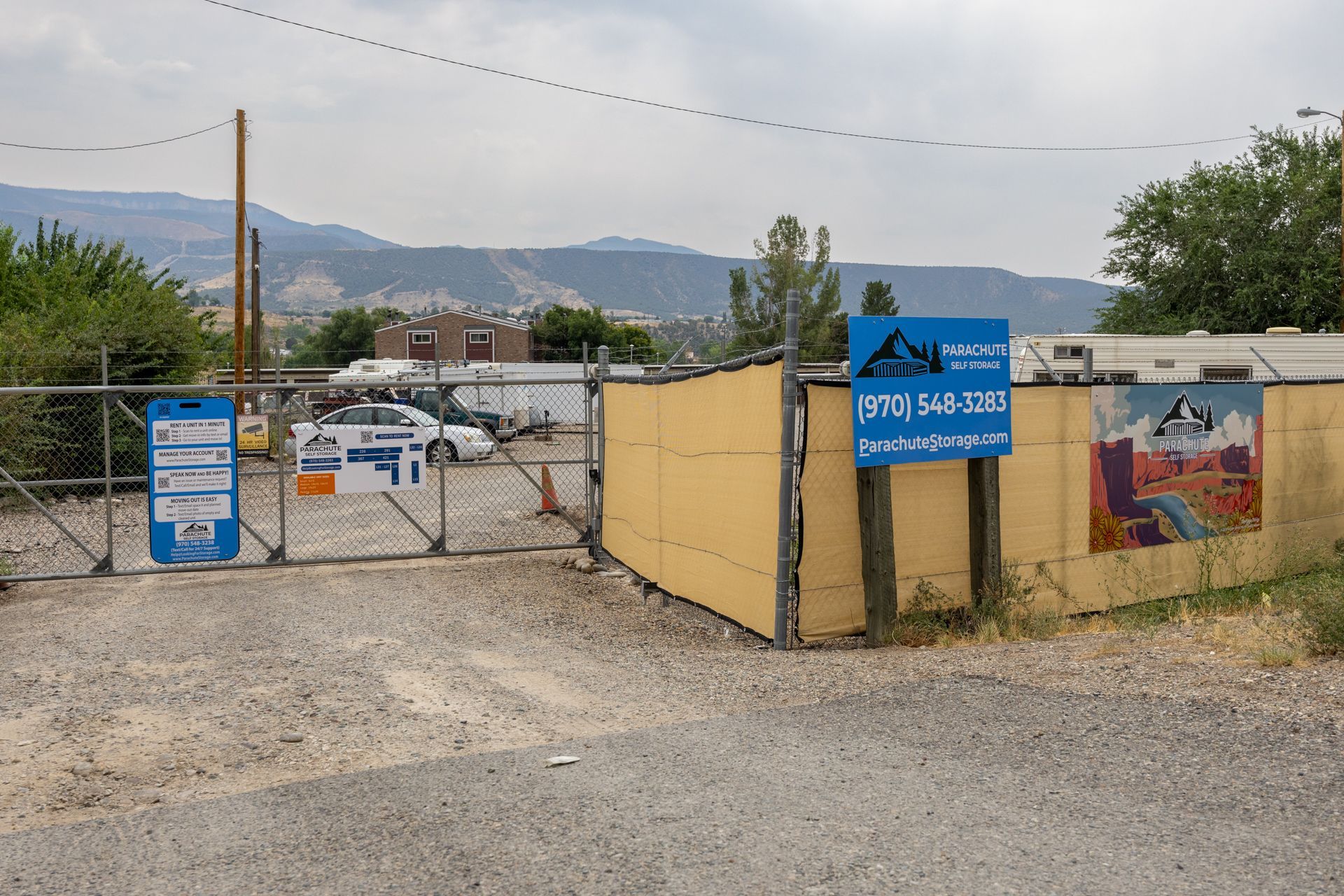
The Parachute Self Storage location at 156 Cardinal Way sits less than one mile from the interstate exit. A second facility at 427 Cardinal Way provides additional capacity within the same convenient access zone. This dual-location setup ensures unit availability even during peak demand periods.
Regional Cost Comparison
Storage costs vary significantly along the I-70 corridor based on local real estate values and competition. Parachute's lower land costs translate to rental rates 20 to 40 percent below facilities in Glenwood Springs or Vail. For long-term storage needs, the drive time investment yields substantial savings.
A 10x10 drive-up unit in Glenwood Springs typically costs $120 to $150 monthly. The same size unit in Parachute costs $115, a savings of $5 to $35 per month. Over a year, this difference totals $60 to $420, easily justifying occasional longer drives for access.
Grand Junction offers competitive rates due to higher facility density, but the 45-minute drive from Parachute makes it impractical for frequent access needs. For residents of Parachute, Battlement Mesa, Rifle, and Silt, local facilities provide the optimal balance of cost and convenience.
Online Rental Process
Modern storage facilities enable complete rental transactions online, eliminating the need for office visits during business hours. This capability proves particularly valuable for renters with demanding work schedules or those relocating from distant locations.
Steps to Rent Online
The online rental process typically requires 5 to 10 minutes and follows a standard sequence. First, select your desired unit size based on the size guide recommendations. Second, provide contact and billing information. Third, review and accept the rental agreement terms. Fourth, complete payment to activate your access code.
Facilities offering immediate move-in provide gate codes and unit assignments automatically upon payment completion. You can drive to the facility and begin using your unit within minutes of completing the online transaction, even at 2 AM on a Sunday.
The rental FAQ addresses common questions about the online process including accepted payment methods, lease terms, and access code delivery. Most questions can be resolved through self-service resources without waiting for staff response.
Managing Your Account
Online account portals allow renters to update payment methods, view billing history, and manage autopay settings. Setting up automatic payments eliminates late fees and the risk of auction due to missed payments. Most facilities process autopay on the same date monthly, typically the anniversary of your move-in date.
Account management also includes move-out notification. Providing advance notice, typically 5 to 10 days before your intended move-out date, ensures proper billing cycle closure and avoids charges for unused days. The online portal tracks your notification status and confirms the final billing date.
For questions requiring human assistance, contact options include phone, text, and email. Locally operated facilities typically respond within hours rather than days, providing faster resolution than corporate call centers.
Making Your Decision
Drive-up storage makes sense when convenience and accessibility rank higher than climate control in your priorities. The ground-level, direct vehicle access saves time on every visit and makes heavy item storage practical without special equipment or multiple helpers.
Choose drive-up storage if you store furniture, appliances, or equipment weighing over 50 pounds. Select drive-up if you plan to access your unit more than twice monthly. Opt for drive-up if you need flexible, month-to-month terms during a transitional period like a move or renovation.
Consider alternatives if you store temperature-sensitive items like electronics, documents, photographs, or wooden instruments. Indoor climate-controlled storage protects these items from the temperature extremes common in Western Colorado's semi-arid climate.
For residents of Parachute, Battlement Mesa, Rifle, Silt, New Castle, and surrounding communities, local drive-up facilities offer the best combination of price, convenience, and security. The I-70 corridor location enables quick access during commutes while competitive pricing keeps long-term storage affordable.
|